
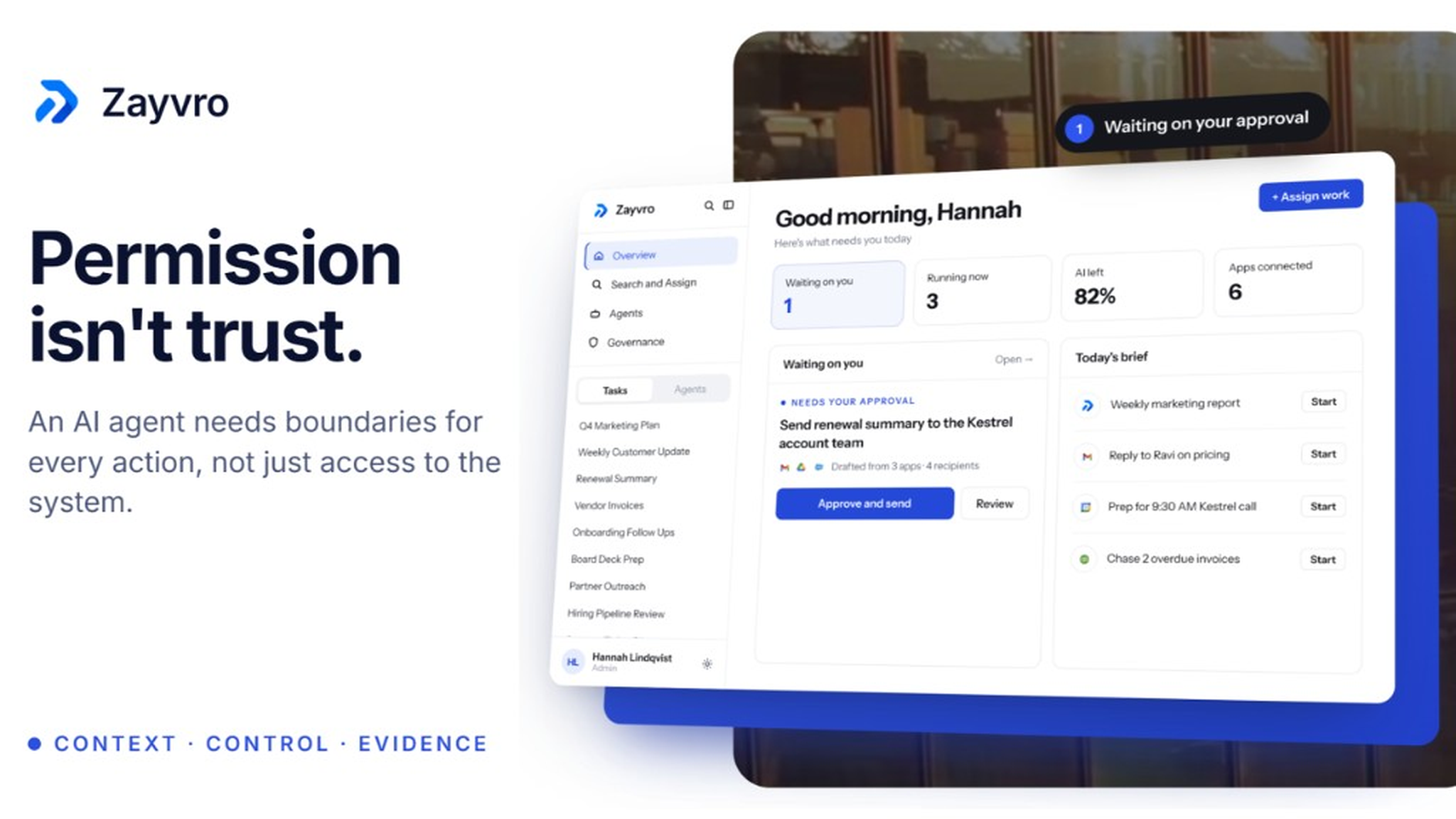
AI agents are moving beyond answering questions.
They can search company systems, summarize information, update records, route approvals, trigger workflows, and coordinate work across multiple tools.
But capability is not the hardest problem.
The more important question is:
Can an agent understand the business well enough to act safely?
Context is more than information
When companies talk about giving AI more context, they often mean connecting it to more documents and systems.
That is only part of the problem.
An agent also needs to understand:
- What a business object means
- What has already happened
- Which policy applies
- Who owns the process
- How exceptions are handled
- What the current state of the work is
A document may describe the standard process.
It may not explain why a customer needs additional review, which supplier exceptions are acceptable, or who makes the final decision.
Useful AI needs information and the meaning around it.
Agents need a map and rails
A capable model does not automatically understand how a company operates.
It needs a map of the work:
- What the process means
- Which rules apply
- Who makes decisions
- What happens when the normal path changes
- When a person must step in
It also needs rails that enforce those boundaries.
The rails determine:
- Which systems the agent can access
- Which tools it can use
- Which actions it can take
- When approval is required
- What happens when something fails
- Whether an action can be reversed
A map without rails is documentation.
Rails without a map are uncontrolled automation.
Reliable enterprise AI needs both.
Trust requires evidence
A chat transcript is not an audit trail.
When an agent makes an important recommendation or takes an action, the organization needs to know:
- What the original request was
- Which sources were used
- What context the agent received
- Which policy was applied
- Who approved the action
- What happened afterward
This is how companies preserve judgment, not just activity.
It also creates a way to improve the process. A correction may reveal a missing rule. An exception may show that the standard process needs to change.
The work should not stop at the answer
The value of AI is not simply finding information faster.
The real test is what happens next.
Does the correct record get updated?
Does the approval reach the right person?
Does the follow-up happen?
Does the system confirm the result?
A reliable workflow should move from:
Understand > Recommend > Check > Approve > Act > Verify
That is how businesses move from knowledge to progress.
Context must survive the handoff
Business work rarely stays in one system.
A task may begin in email, use information from a CRM, require a document, and finish with an update somewhere else.
If the context disappears at every boundary, the agent has to reconstruct the task repeatedly.
That creates errors, duplicated work, and inconsistent decisions.
The objective, evidence, permissions, decisions, and next steps should travel with the work.
Start with one workflow
Enterprise AI does not need to begin with a massive transformation plan.
Start with one workflow that has:
- Real users
- Accessible data
- A measurable outcome
- Clear failure cases
- A defined approval boundary
Measure what changed.
Then improve what worked and expand from there.
The goal is not to prove that an agent can complete a task once.
The goal is to build work that people can trust, operate, and improve.
The new standard for enterprise AI
The old question was:
Can AI answer this?
The better question is:
Can AI understand the context, respect the boundaries, take the right action, and show its work?
Zayvro helps companies turn scattered company data into permission-aware knowledge and governed work across the systems they already use.
The future of enterprise AI will not belong to agents with the most access.
It will belong to agents that understand the business, act within the right boundaries, and leave a clear record of what happened.
Learn more about Zayvro’s approach to permission-aware knowledge and governed work:
What would you trust an AI agent to do without approval?